The Erice Summer School of Bioelectromagnetism “Alessandro Chiabrera” celebrated its 13th edition with significant CLUE-H participation. This school, whose co-director is Dr Maria Rosaria Scarfì, from NextGEM partners IREA-CNR, is celebrated annually in Sicily, and this year’s edition has been co-organised with the BioeEM Society.
While the 2024 edition was 100% dedicated to the core subject of this project, this year’s edition was dedicated to “Bioelectromagnetic systems for innovative High Performance Sensing and Interaction strategies”, a subject that is also tackled by this NextGEM. Dr Marco Spirito (Technical University of Delft) was one of the speakers during the talk “Microwave wearable devices”, during which he demonstrated one of the devices he works with. Dr Maria Rosaria Scarfi made one of the introductory lessons, too.
The event counted on other CLUE-H participations, too:
Electroporation: from basic research to clinical applications, by Marie-Pièrre Rols (CNRS, ETAIN & GOLIAT)
Microwave laboratory devices, by Alessandra Paffi (University of Rome La Sapienza, GOLIAT)
Microwave dielectric spectroscopy for biological analysis and EM fields interactions , by K. Grenier (CNRS, ETAIN & GOLIAT)
The final programme of the School can be found here.
A new GOLIAT study led by researchers from INERIS reports no measurable biological effects of short-term exposure to 5G signals on either stress responses or brain electrical activity in healthy adults. The results of the study were disclosed in two different papers published in Environmental Research. These are the first coordinated human laboratory studies to assess potential acute effects of exposure to the highest frequency band of 5G under conditions that resemble real environmental levels.
Both studies examined exposure to real 5G signals and found no changes in physiological stress markersor in the patterns of electrical activity that the brain naturally generates at rest. The results indicate that brief exposure to 5G signals similar to those found in the environment did not alter the body’s stress response or the brain’s typical electrical rhythms.
Methodology
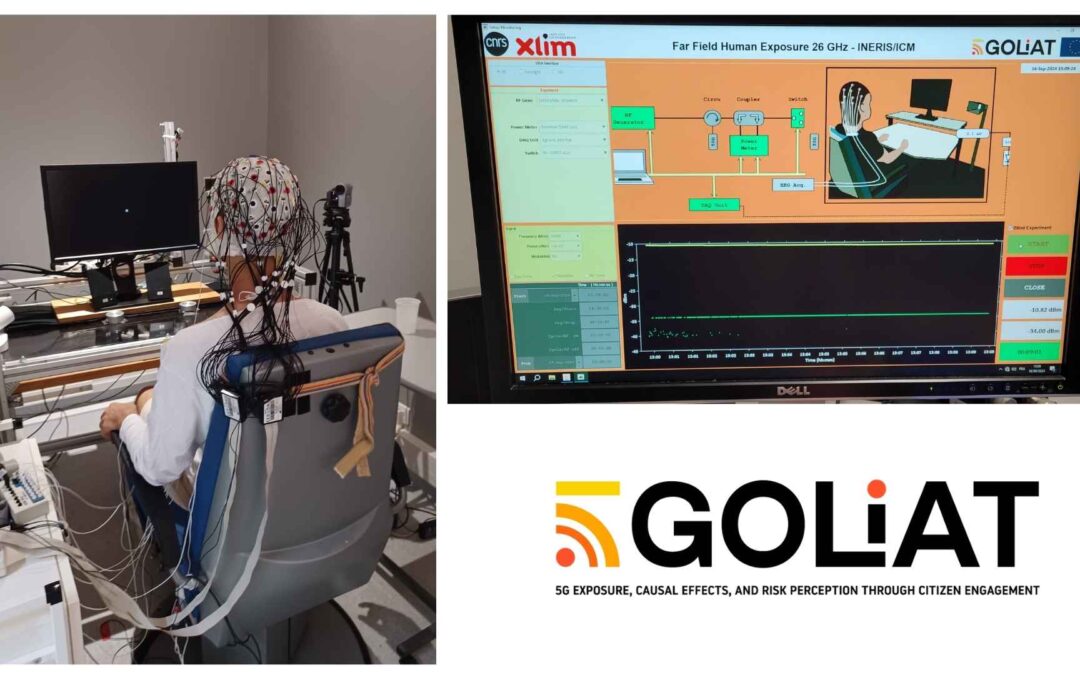
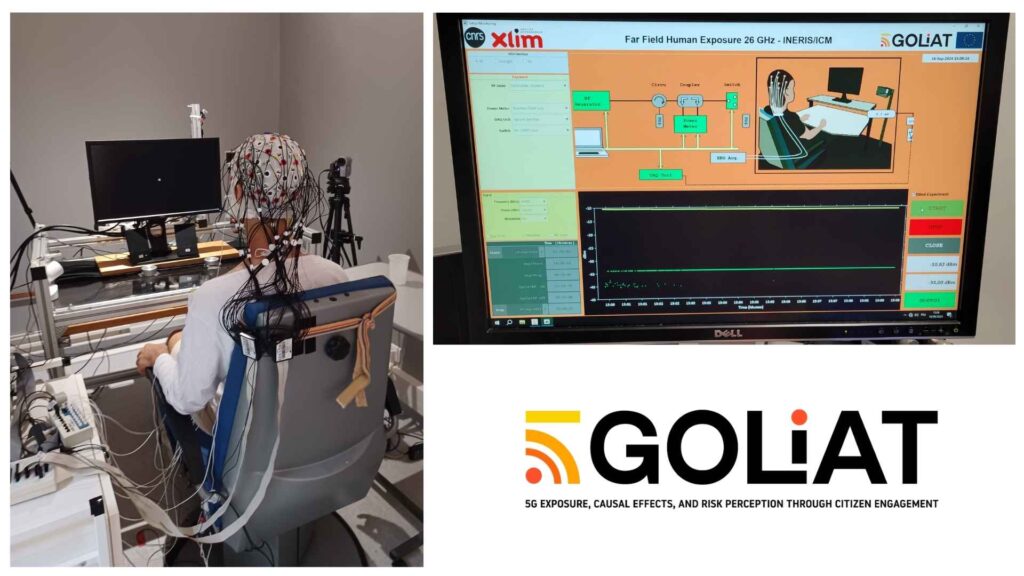
The studies shared a triple-blind, randomized design, in which participants, experimenters and data analysts did not know whether a real or sham (placebo) exposure was being administered. All sessions took place in an electromagnetically shielded room to avoid interference. Participants —31 in total— were seated 120 cm from a horn antenna emitting a 5G New Radio signal at 26 GHz, with intensities of 2 V/m at the head and 1 V/m at the torso—levels corresponding to the highest values measured in real outdoor environments by the French national frequency authority.
Both studies were carried out at the same time with the same protocol: each volunteer completed one session with real exposure and one with sham exposure, each lasting around one hour, including 26.5 minutes of exposure. During these sessions, researchers collected saliva samples from 16 participants to analyse two validated stress biomarkers (cortisol and alpha-amylase) and recorded the brain’s electrical activity using electroencephalography. This approach allowed the team to assess both physiological stress responses and potential changes in the brain’s natural electrical patterns under identical exposure conditions.
No changes detected in brain electrical activity
Using electroencephalography, the researchers monitored the brain’s electrical oscillations across all major frequency bands—delta, theta, alpha and beta—which correspond to different natural rhythms of brain activity. These range from the slow waves linked to deep rest (delta) to the faster waves associated with alertness and mental activity (beta). Across all bands, and at all time points before, during and after exposure, the researchers found no differences between the real and sham exposure sessions.
Short-term exposure also did not affect the body’s physiological stress response. Cortisol and alpha-amylase, two widely used indicators of stress and autonomic nervous system activation, remained stable across all sampling points. Therefore, the researchers did not find evidence that exposure to 5G signals at environmental levels triggers acute biological changes related to stress.
Why study 26 GHz?
The 5G technology uses different frequency bands. Although the 3.5 GHz had an earlier and wider deployment, the study focuses on the 26 GHz band, which is being introduced to support faster data transmission. “We focused on 26 GHz because there were very few studies examining its potential impact on humans,” explains Lisa Michelant, researcher at INERIS and first author of both papers. “It is a new frequency for public mobile communication, and its physical behaviour—such as limited penetration into the skin—differs from that of lower-frequency 4G or 5G signals”.
According to Brahim Selmaoui, researcher at INERIS and senior author of the research: “These findings are consistent with previous scientific evidence showing no acute biological effects at commonly encountered radiofrequency exposure levels. While more research is still needed on long-term and repeated exposures, our results provide reassuring data for this new 5G band and contribute to ongoing safety assessments by international health authorities.”
This research is part of Project GOLIAT, a five year project funded by European Union’s Horizon Europe research and Innovation programme under Grant Agreement No 101057262. The project is coordinated by the Barcelona Institute for Global Health (ISGlobal).
Michelant L, Baz T, Carrie A, Hugueville L, Lévêque P, Selmaoui B. Millimeter-wave high frequency 5G (26 GHz) electromagnetic fields do not modulate human brain electrical activity. Environ Res. 2025 Nov 18:123349. doi: 10.1016/j.envres.2025.123349. Epub ahead of print. PMID: 41265672.
Michelant L, Hugueville L, Lévêque P, Selmaoui B. No measurable impact of acute 26 GHz 5G exposure on salivary stress markers in healthy adults. Environ Res. 2025 Nov 27;290:123439. doi: 10.1016/j.envres.2025.123439. Epub ahead of print. PMID: 41317834.
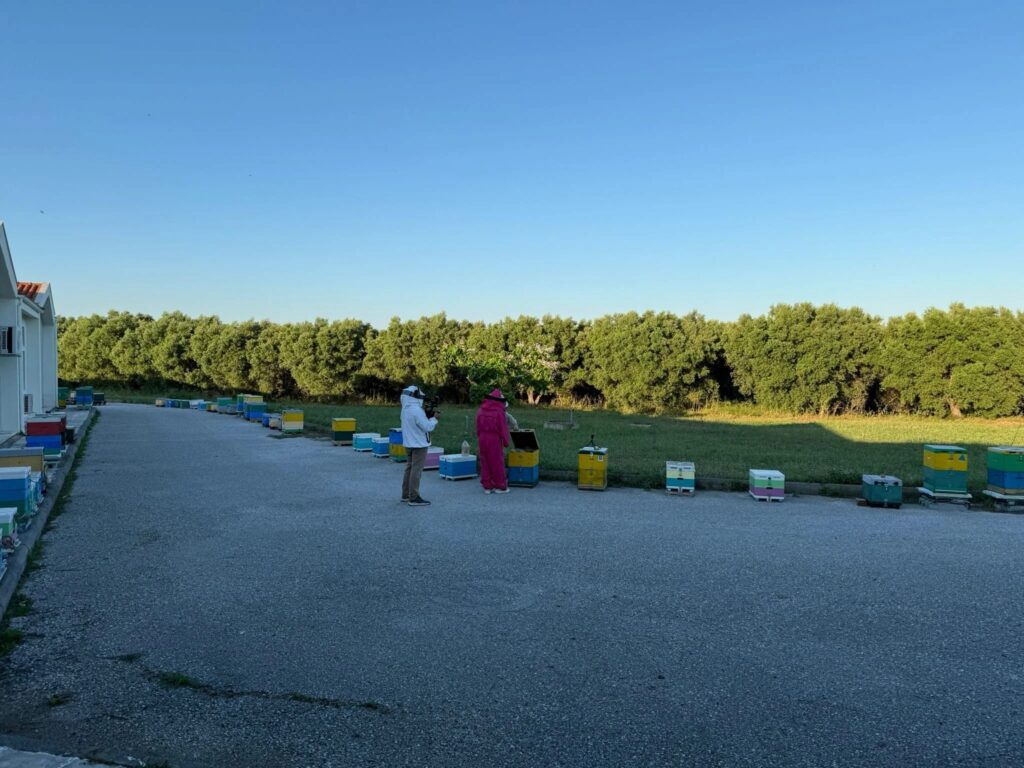
As digital infrastructures expand rapidly, questions are emerging about their interaction with living systems. A new study from the ETAIN Project takes a closer look at what happens when insects are exposed to radiofrequency electromagnetic fields (RF-EMF) associated with 5G technologies.
The research focuses on insects as key ecological indicators, given their essential role in pollination, food systems, and ecosystem stability. Using controlled laboratory conditions, the study examines behavioural and physiological responses of insects when exposed to RF-EMF within ranges relevant to current and emerging mobile communication networks.
Rather than drawing premature conclusions, the study emphasises careful experimental design, reproducibility, and transparent exposure assessment. This approach helps address existing gaps in scientific knowledge, where results have often been inconsistent due to methodological differences. By refining protocols and measurement techniques, ETAIN contributes to improving the quality and comparability of research in this field.
Beyond the laboratory, the study is framed within a broader planetary health perspective. It highlights the need to assess technological innovation not only in terms of performance and efficiency, but also through its potential environmental and ecological effects. Insects, as highly sensitive and widely distributed organisms, offer valuable insights into these interactions.
This work represents an important step in ETAIN’s wider mission: supporting evidence-based dialogue on digitalisation, environmental sustainability, and health. By strengthening the scientific basis for assessment, the project aims to inform policymakers, researchers, and society at large as decisions about future connectivity are made.
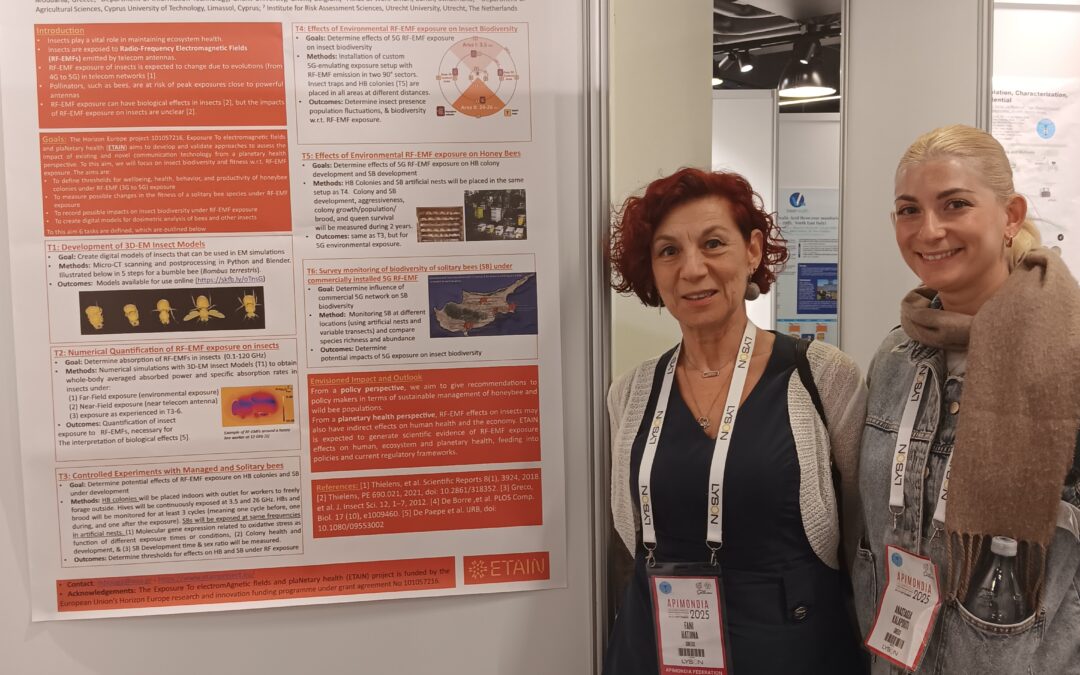
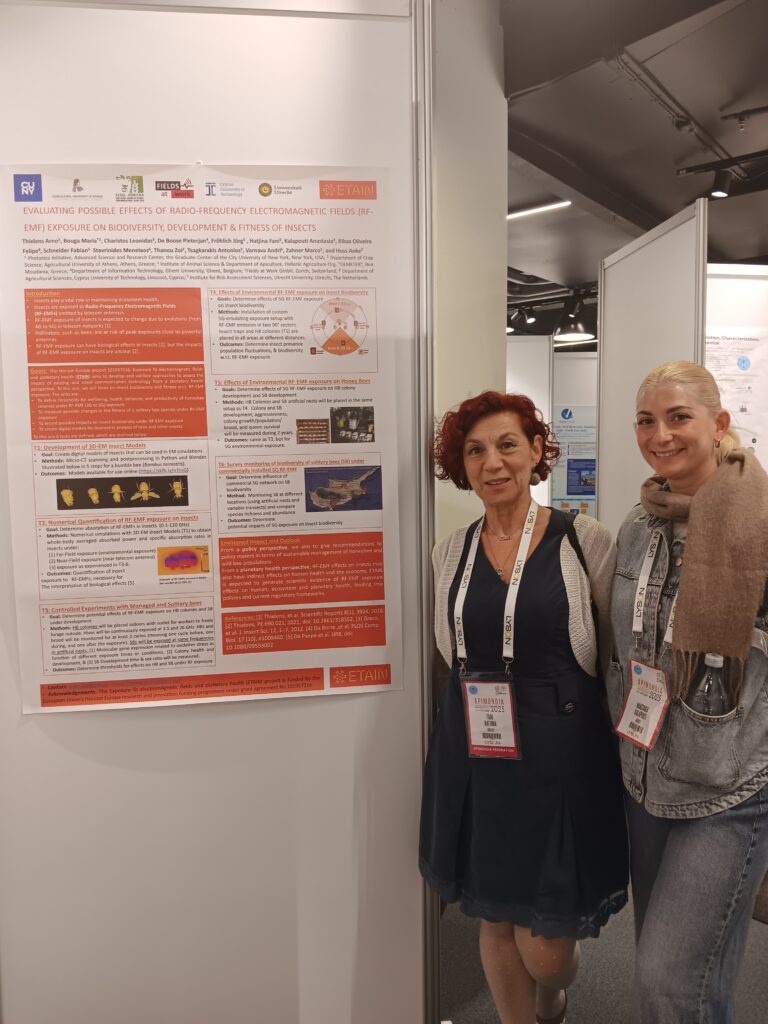
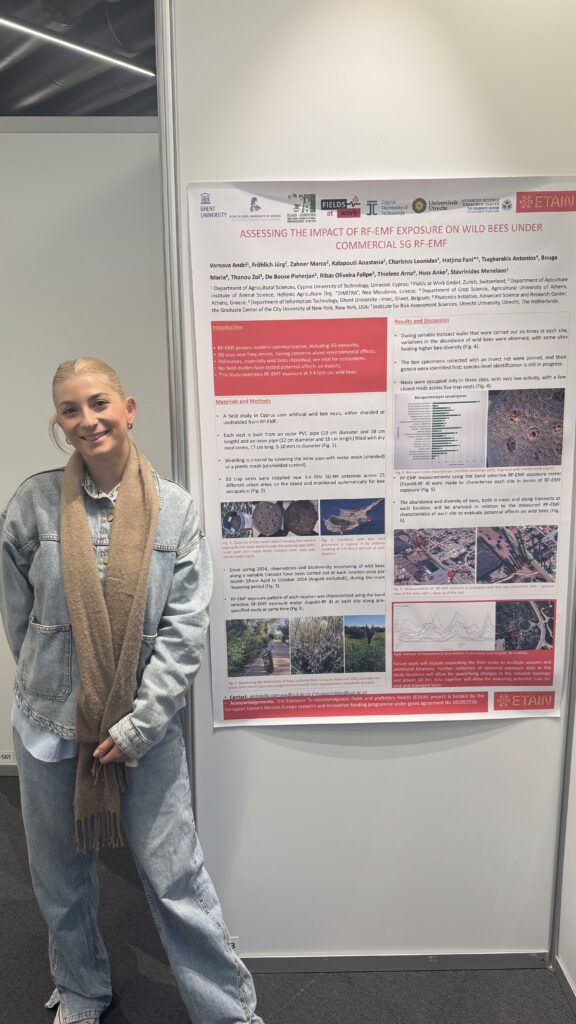
From 23–27 September 2025, the ETAIN Project participated in the 49th Apimondia Conference, the world’s largest global event dedicated to beekeeping, pollinator science, and apicultural innovation. With over 8,200 participants from across the world, Apimondia 2025 provided a unique international forum to exchange knowledge on the challenges facing insects and pollinators.
ETAIN contributed to the scientific programme by presenting three research posters exploring the potential effects of radiofrequency electromagnetic fields (RF-EMF) on insects and pollinators. The presentations reflected the project’s interdisciplinary approach, combining experimental studies, exposure assessment, and planetary health perspectives to better understand how emerging digital infrastructures may interact with biological systems.
One poster focused on laboratory and field-based observations of pollinator behaviour and physiology under RF-EMF exposure. A second addressed methodological advances in exposure assessment and modelling, while a third explored how citizen science and digital tools can support large-scale data collection on environmental exposure. Together, these contributions highlighted the importance of robust, transparent methodologies and cross-sector collaboration when investigating environmental health risks.
By engaging with beekeepers, scientists, policymakers, and industry representatives, ETAIN reinforced the relevance of its work beyond academia. Participation in Apimondia strengthened dialogue between research and practice, helping to translate scientific evidence into shared understanding and informed decision-making for pollinator protection in an increasingly connected world.