The Erice Summer School of Bioelectromagnetism “Alessandro Chiabrera” celebrated its 13th edition with significant CLUE-H participation. This school, whose co-director is Dr Maria Rosaria Scarfì, from NextGEM partners IREA-CNR, is celebrated annually in Sicily, and this year’s edition has been co-organised with the BioeEM Society.
While the 2024 edition was 100% dedicated to the core subject of this project, this year’s edition was dedicated to “Bioelectromagnetic systems for innovative High Performance Sensing and Interaction strategies”, a subject that is also tackled by this NextGEM. Dr Marco Spirito (Technical University of Delft) was one of the speakers during the talk “Microwave wearable devices”, during which he demonstrated one of the devices he works with. Dr Maria Rosaria Scarfi made one of the introductory lessons, too.
The event counted on other CLUE-H participations, too:
Electroporation: from basic research to clinical applications, by Marie-Pièrre Rols (CNRS, ETAIN & GOLIAT)
Microwave laboratory devices, by Alessandra Paffi (University of Rome La Sapienza, GOLIAT)
Microwave dielectric spectroscopy for biological analysis and EM fields interactions , by K. Grenier (CNRS, ETAIN & GOLIAT)
The final programme of the School can be found here.
A new GOLIAT study led by researchers from INERIS reports no measurable biological effects of short-term exposure to 5G signals on either stress responses or brain electrical activity in healthy adults. The results of the study were disclosed in two different papers published in Environmental Research. These are the first coordinated human laboratory studies to assess potential acute effects of exposure to the highest frequency band of 5G under conditions that resemble real environmental levels.
Both studies examined exposure to real 5G signals and found no changes in physiological stress markersor in the patterns of electrical activity that the brain naturally generates at rest. The results indicate that brief exposure to 5G signals similar to those found in the environment did not alter the body’s stress response or the brain’s typical electrical rhythms.
Methodology
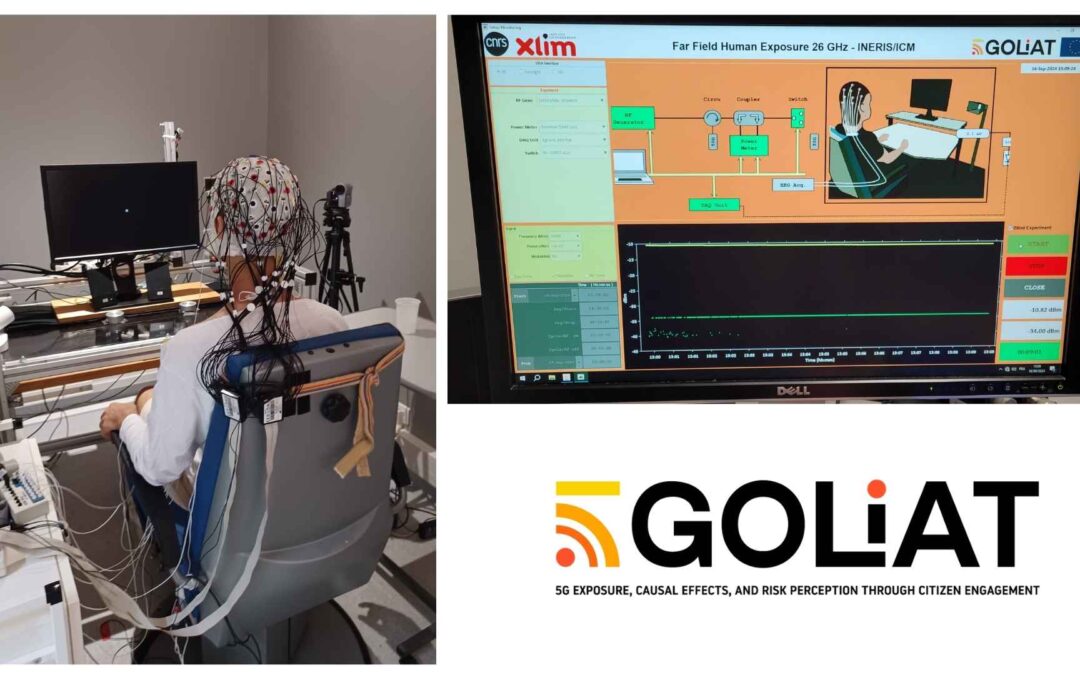
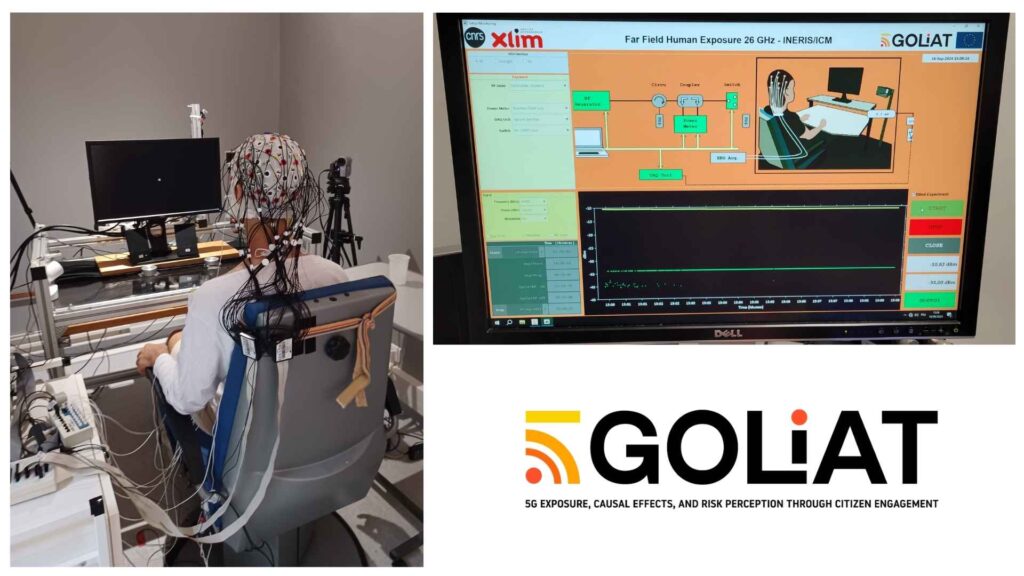
The studies shared a triple-blind, randomized design, in which participants, experimenters and data analysts did not know whether a real or sham (placebo) exposure was being administered. All sessions took place in an electromagnetically shielded room to avoid interference. Participants —31 in total— were seated 120 cm from a horn antenna emitting a 5G New Radio signal at 26 GHz, with intensities of 2 V/m at the head and 1 V/m at the torso—levels corresponding to the highest values measured in real outdoor environments by the French national frequency authority.
Both studies were carried out at the same time with the same protocol: each volunteer completed one session with real exposure and one with sham exposure, each lasting around one hour, including 26.5 minutes of exposure. During these sessions, researchers collected saliva samples from 16 participants to analyse two validated stress biomarkers (cortisol and alpha-amylase) and recorded the brain’s electrical activity using electroencephalography. This approach allowed the team to assess both physiological stress responses and potential changes in the brain’s natural electrical patterns under identical exposure conditions.
No changes detected in brain electrical activity
Using electroencephalography, the researchers monitored the brain’s electrical oscillations across all major frequency bands—delta, theta, alpha and beta—which correspond to different natural rhythms of brain activity. These range from the slow waves linked to deep rest (delta) to the faster waves associated with alertness and mental activity (beta). Across all bands, and at all time points before, during and after exposure, the researchers found no differences between the real and sham exposure sessions.
Short-term exposure also did not affect the body’s physiological stress response. Cortisol and alpha-amylase, two widely used indicators of stress and autonomic nervous system activation, remained stable across all sampling points. Therefore, the researchers did not find evidence that exposure to 5G signals at environmental levels triggers acute biological changes related to stress.
Why study 26 GHz?
The 5G technology uses different frequency bands. Although the 3.5 GHz had an earlier and wider deployment, the study focuses on the 26 GHz band, which is being introduced to support faster data transmission. “We focused on 26 GHz because there were very few studies examining its potential impact on humans,” explains Lisa Michelant, researcher at INERIS and first author of both papers. “It is a new frequency for public mobile communication, and its physical behaviour—such as limited penetration into the skin—differs from that of lower-frequency 4G or 5G signals”.
According to Brahim Selmaoui, researcher at INERIS and senior author of the research: “These findings are consistent with previous scientific evidence showing no acute biological effects at commonly encountered radiofrequency exposure levels. While more research is still needed on long-term and repeated exposures, our results provide reassuring data for this new 5G band and contribute to ongoing safety assessments by international health authorities.”
This research is part of Project GOLIAT, a five year project funded by European Union’s Horizon Europe research and Innovation programme under Grant Agreement No 101057262. The project is coordinated by the Barcelona Institute for Global Health (ISGlobal).
Michelant L, Baz T, Carrie A, Hugueville L, Lévêque P, Selmaoui B. Millimeter-wave high frequency 5G (26 GHz) electromagnetic fields do not modulate human brain electrical activity. Environ Res. 2025 Nov 18:123349. doi: 10.1016/j.envres.2025.123349. Epub ahead of print. PMID: 41265672.
Michelant L, Hugueville L, Lévêque P, Selmaoui B. No measurable impact of acute 26 GHz 5G exposure on salivary stress markers in healthy adults. Environ Res. 2025 Nov 27;290:123439. doi: 10.1016/j.envres.2025.123439. Epub ahead of print. PMID: 41317834.
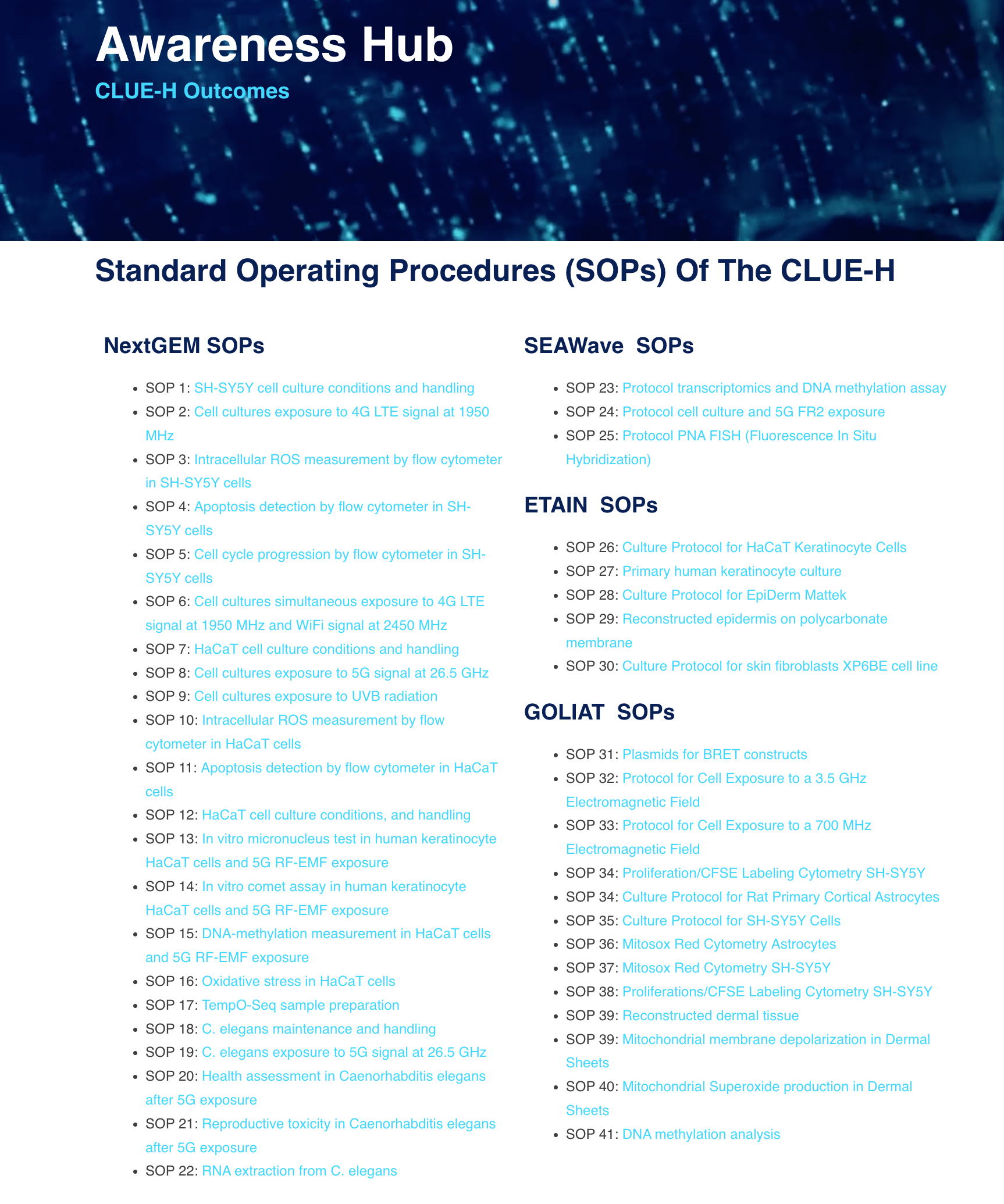
The CLUE-H scientists disseminated 41 Standard Operating Procedures (SOPs) for in vitro and in vivo experiments designed to assess the biological effects of 5G signals in both the FR1 and FR2 frequency bands.
The quality of experimental methods impact the outcome of biological responses, therefore, it is essential that experimental studies are designed in compliance with quality criteria, on both biological and electromagnetic sides.
The definition of SOPs is highly recommended for a general improvement of the experimental approaches for obtaining reliable data for health risk assessment.
NextGEM continues to develop the Innovation and Knowledge Hub (NIKH) as a central platform designed to share scientific results, practical guidelines, and policy recommendations with relevant stakeholders, while also raising awareness among citizens. NIKH serves as a repository for global scientific literature and results from CLUE-H projects, with a primary focus on supporting policymakers and researchers. It compiles validated tools, integrated data, guidelines, and insights generated by NextGEM, with ongoing efforts to enh
NIKH is designed to provide comprehensive access to scientific knowledge on radiofrequency electromagnetic field (RF-EMF) exposure and its potential impacts on health. It serves as a trusted environment for European regulatory authorities, the scientific community, industry stakeholders, and citizens, offering a standardized way to store, manage, and assess project outcomes, while ensuring compliance with FAIR (Findable, Accessible, Interoperable, Reusable) data principles.
NIKH provides a user-centric interface Public Dashboard providing tailored access to guidelines, campaigns, FAQs and scientific catalogue, categorized as follows:
Stakeholders– The NIKH platform supports EMF stakeholders by enabling evidence-based decision making, fostering collaboration in policy development, and providing access to the latest scientific knowledge in the field.
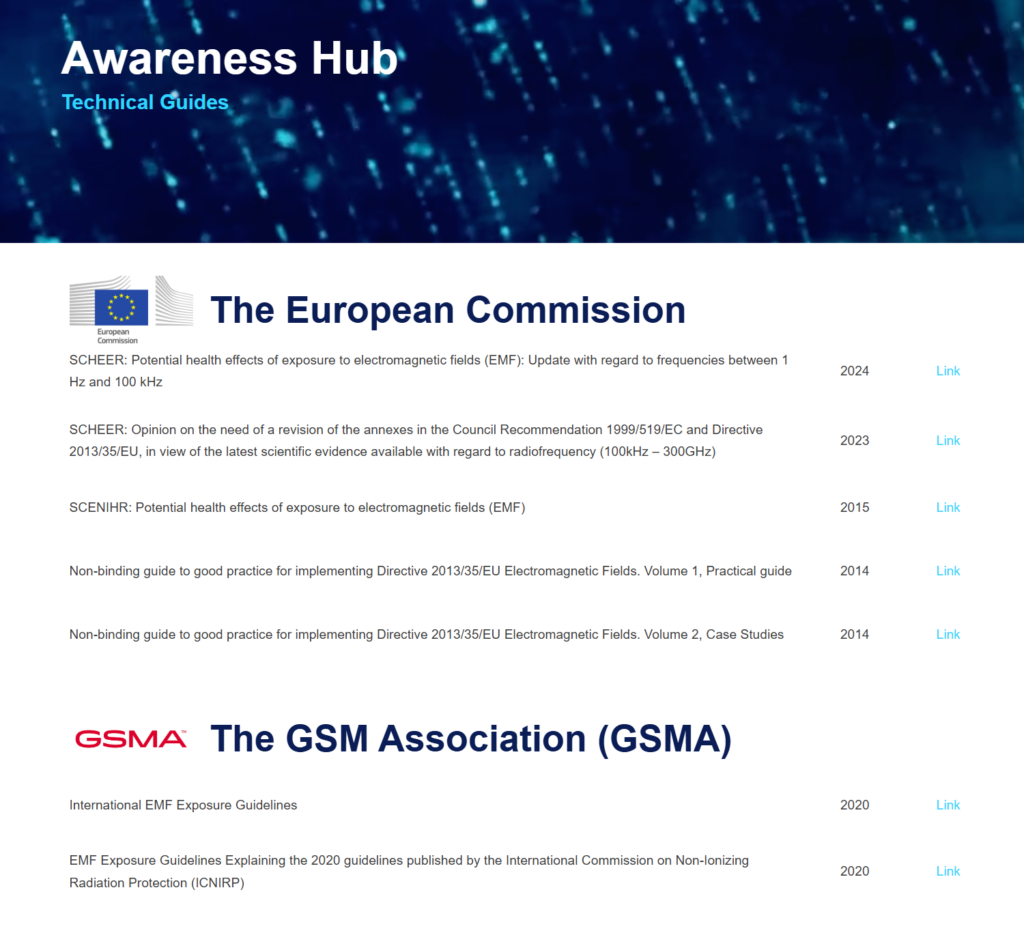
Awareness Hub – The Awareness Hub provides a central, easy-to-access source of current information on EMF exposure, health research, and regulatory updates. It delivers resources designed for the public, supporting informed choices through scientific guidelines, insights, and educational material.
Scientists– The NIKH platform acts as a collaborative environment for researchers studying EMF exposure, offering access to a wide range of scientific findings and fostering interdisciplinary exchange to advance knowledge in the field.
A study from #ProjectGOLIAT shows that environmental exposure to radiofrequency electromagnetic fields (RF-EMF) in Europe remains below international safety limits but varies by urbanicity, network quality and how the phone is used
A new study led by researchers from the Swiss TPH under the umbrella of Project GOLIAT provides the most comprehensive assessment up to date of environmental and personal exposure to radiofrequency electromagnetic fields (RF-EMF) from 5G networks across ten European countries. The results have been published in Environment International.
The study assessed exposure levels in over 800 different microenvironments — including schools, transport hubs, and residential areas — in both urban and rural settings across Austria, Belgium, France, Hungary, Italy, the Netherlands, Poland, Spain, Switzerland, and the UK.
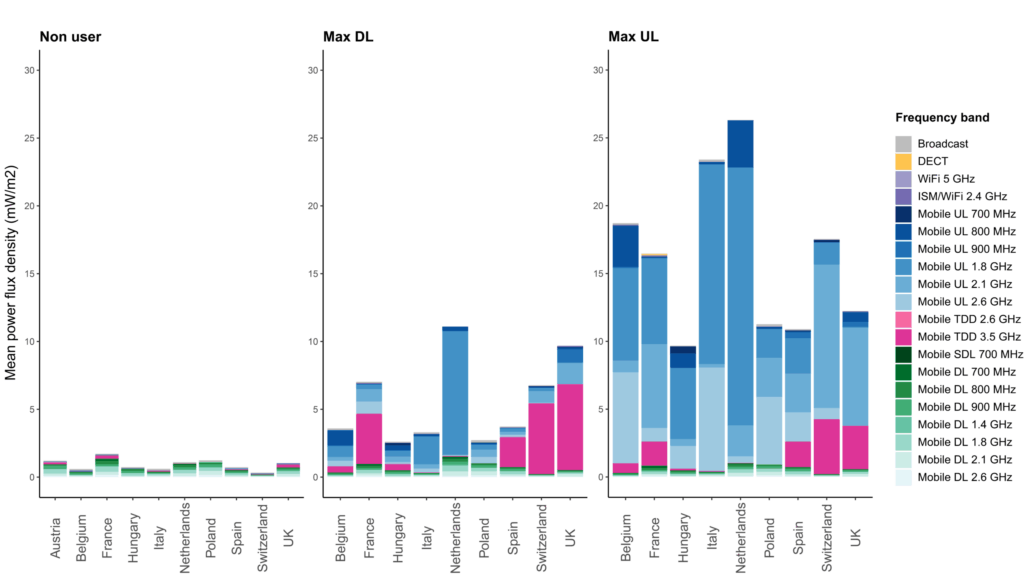
Using backpack-mounted RF exposimeters and mobile phones configured for different usage scenarios (non-use, maximum download, and maximum upload), researchers measured exposure across 35 frequency bands, including key 5G frequencies like 3.5 GHz. Measurements were taken between 2023 and 2024 under real-world conditions.
Environmental levels well below the limits
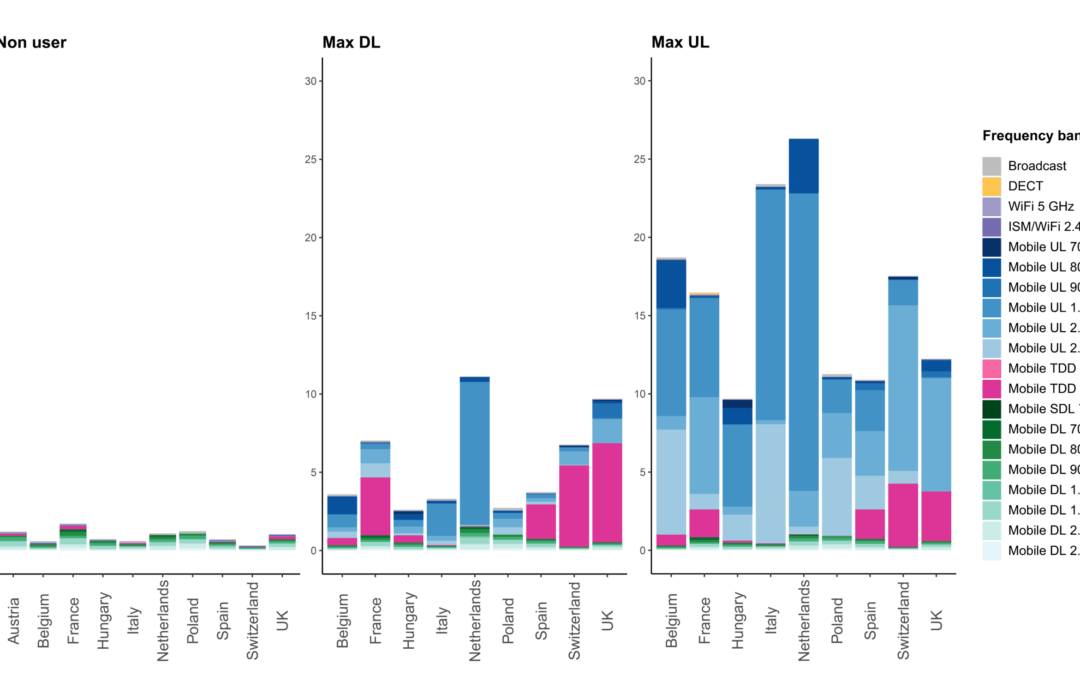
The first of the scenarios assessed was the non-user mode, in which the researchers’ phones were set in flight mode. With this method, the team assessed environmental exposure to RF-EMF, which in line with previous research, was found to be generally low and remained well below international guidelines.
“We observed that in the non-use scenario exposure was lower in rural areas and tended to increase with urbanisation, something that can be attributed to a higher density of base stations in urban areas”, says Adriana Fernandes Veludo, first author of the study.
The lowest environmental levels of exposure were registered in those countries with more stringent precautionary levels of RF-EMF, such as Switzerland, Belgium or Italy.
Higher levels when mobile phones are actively used
The data revealed that exposure to RF-EMF increased substantially when mobile phones were actively used. In the scenario where mobile phones were set to download large files, exposure was -depending on the country- from 2 to to 20 times higher than in the non-use scenario, due to emissions from the phone interacting with the base station. Interestingly, the new 5G bands have been used only in some countries, reflecting country differences in the state of 5G implementation.
Lastly, the highest levels of exposure were registered in the maximum uplink scenario, where phones were set to upload large amounts of data and emitted about 30 cm away from the measurement device. Compared to the non-use scenario, exposure levels were between 9 and 53 times higher, depending on the country. Those with the highest mean levels of exposure were the Netherlands, Italy and Belgium.
“Unlike in the non-use scenario, in the maximum data upload scenario the highest exposure levels were measured in rural areas, where the network signal quality is poorer and the phones need to emit at higher power to send the data”, says Martin Röösli, researcher at the Swiss TPH and last author of the study.
It is important to note that in the Netherlands and in Poland 5G services in the 3.5 GHz frequency band were not yet in use at the time of the measurements, in 2023, and have only been launched in 2024. In 2025, the teams are busy collecting new data and it will be possible to evaluate the evolution of 5G exposure levels in Europe, with particular interest in these two countries that now have 5G services available.
Reference Adriana Fernandes Veludo, Bram Stroobandt, Han Van Bladel, Nekane Sandoval-Diez, Kenneth Deprez, Sam Aerts, Wassim Ben Chikha, Joe Wiart, Zsuzsanna Vecsei, Péter Pál Necz, György Thuróczy, Martina Benini, Marta Bonato, Silvia Gallucci, Gabriella Tognola, Marta Parazzini, Lea Beláčková, Nina Vaupotič, Pawel Mamrot, Magda Marianska, Piotr Politanski, Kinga Polanska, Matthew Stamets, Patricia de Llobet, Gemma Castaño-Vinyals, Mònica Guxens, Paige M. Hulls, Frank de Vocht, Wout Joseph, Martin Röösli, Assessing radiofrequency electromagnetic field exposure in multiple microenvironments across ten European countries with a focus on 5G, Environment International, Volume 200, 2025, 109540, ISSN 0160-4120, https://doi.org/10.1016/j.envint.2025.109540.